
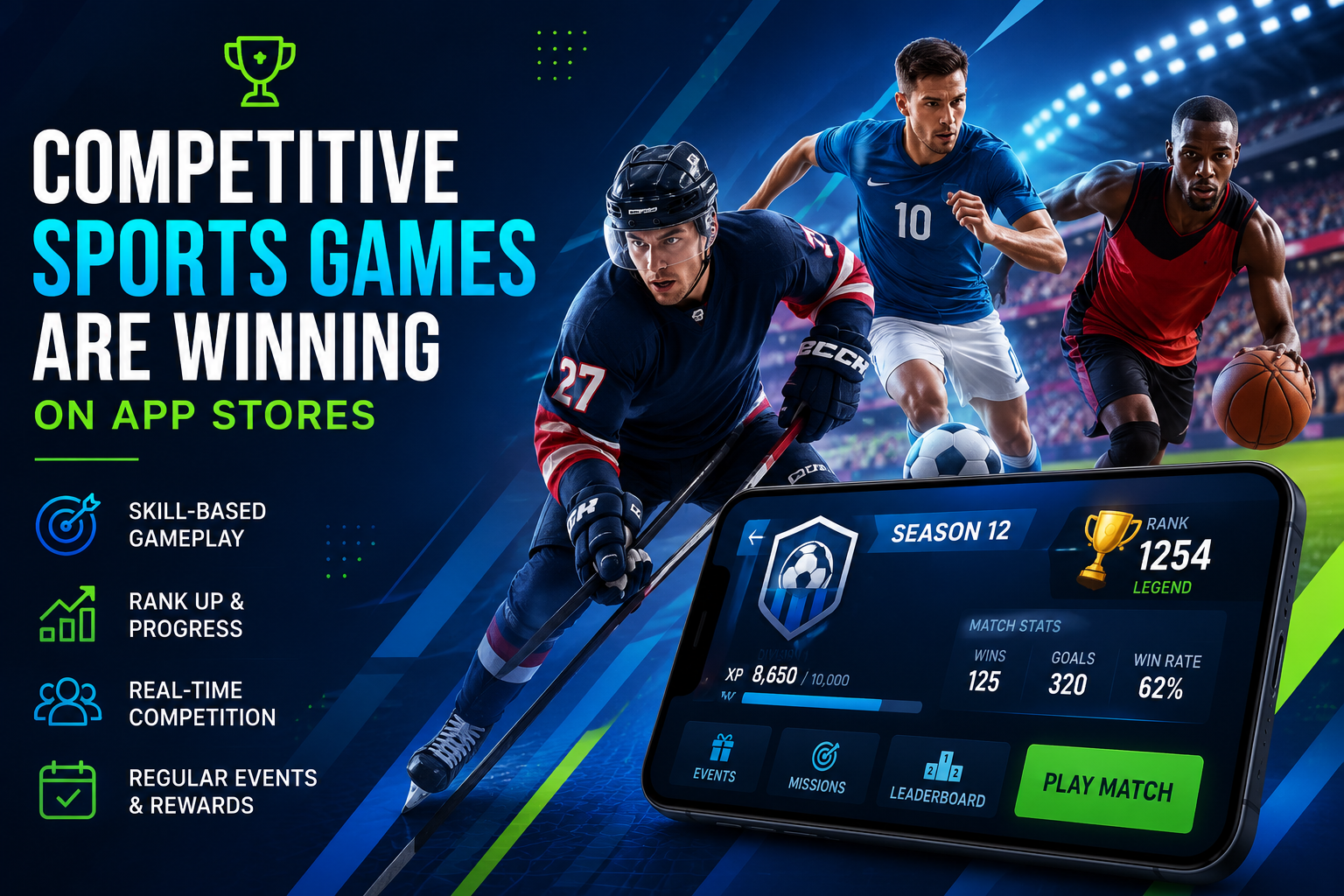
Mobile gaming trends change quickly, but one category continues to show remarkable consistency: competitive sports games. From hockey and football to basketball and racing titles, games built around competition remain among the most downloaded and actively played experiences on mobile devices.
In 2026, competitive sports games continue to perform strongly on app stores because they combine skill-based gameplay, long-term progression, and social interaction in ways that keep players engaged for months rather than days.
Competition Creates Long-Term Motivation
One of the biggest advantages of sports games is that competition naturally encourages players to improve.
Unlike many casual games that focus on short-term entertainment, competitive sports titles give players clear goals and measurable progress.
Common motivators include:
- Climbing rankings
- Unlocking rewards
- Improving win rates
- Completing seasonal challenges
- Earning trophies
- Mastering game mechanics
This sense of progression keeps players returning regularly.
Sports Are Naturally Easy to Understand
Another reason for the popularity of competitive sports games is accessibility.
Most players already understand the basic rules of sports such as:
- Hockey
- Football
- Basketball
- Tennis
- Racing
Because the gameplay feels familiar, users can quickly start playing without spending hours learning complex systems.
This lower entry barrier helps attract wider audiences.
Mobile Hardware Continues to Improve
Modern smartphones are significantly more powerful than they were just a few years ago.
Developers can now deliver:
- Smoother animations
- Better graphics
- Faster loading times
- Improved physics systems
- More realistic gameplay
These improvements make sports games feel increasingly polished and competitive, even on mobile devices.
Skill-Based Gameplay Encourages Retention
Many successful sports games focus heavily on player skill rather than luck.
| Casual Mobile Games | Competitive Sports Games |
|---|---|
| Short-term engagement | Long-term progression |
| Simple objectives | Skill development |
| Limited competition | Rankings and leagues |
| Quick sessions | Continuous improvement |
| Minimal strategy | Tactical decision-making |
Players often stay engaged because they can see themselves improving over time.
Multiplayer Features Continue to Drive Growth
Online competition has become a major factor behind the success of sports games.
Many titles now include:
- Ranked matches
- Online tournaments
- Global leaderboards
- Friend challenges
- Team competitions
- Seasonal leagues
These features create communities that extend beyond the game itself.
For many players, the social aspect becomes just as important as the gameplay.
Content Updates Keep Games Fresh
Successful sports games rarely remain unchanged.
Developers regularly introduce:
- New events
- Updated teams
- Fresh challenges
- Seasonal rewards
- Gameplay improvements
This ongoing support helps maintain interest and encourages players to return throughout the year.
Short Sessions Fit Mobile Lifestyles
Mobile players often prefer games that can be enjoyed in short bursts.
Competitive sports titles are particularly effective because a match, race, or challenge can often be completed in just a few minutes.
This flexibility makes them ideal for:
- Commuting
- Lunch breaks
- Waiting periods
- Casual evening gaming
Players can enjoy meaningful progress without committing to lengthy sessions.
The Future Looks Strong
As mobile technology continues advancing, competitive sports games are expected to remain one of the strongest categories on app stores.
Their combination of skill-based gameplay, familiar mechanics, social competition, and regular updates creates a formula that continues to attract both new and experienced players.
In 2026, competitive sports games are proving that meaningful competition remains one of the most effective ways to build long-term engagement in the mobile gaming industry.