
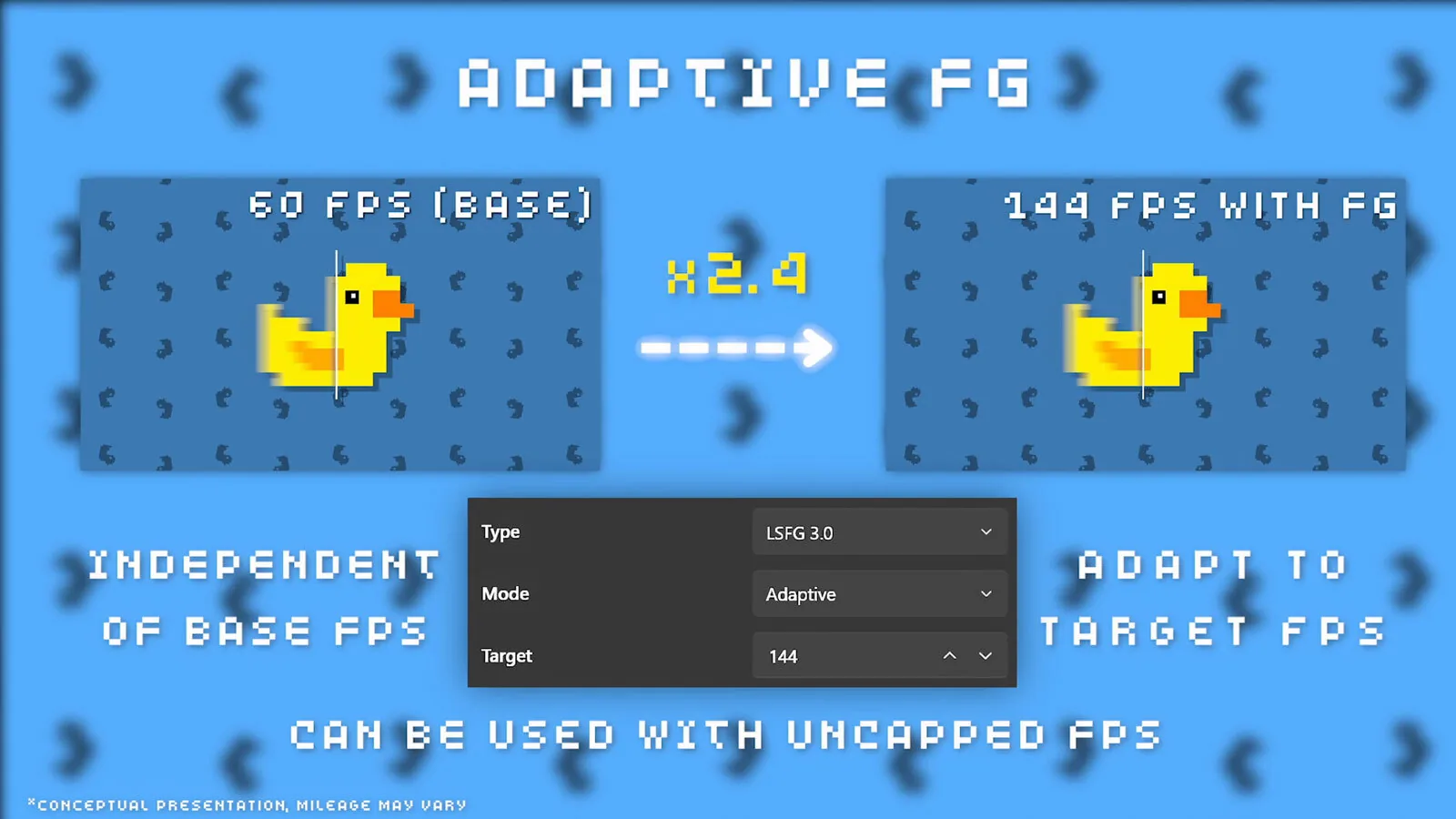
Game Native is making PC gaming on Android more practical with support for Lossless Scaling’s multi-frame generation technology.

PC Gaming on Android Gets a Major Performance Boost
Playing full PC games on an Android smartphone is gradually becoming a more realistic option. One of the apps pushing this idea forward is Game Native, a tool designed to help users run PC titles on Android devices through emulation.
With its latest update, Game Native has introduced support for multi-frame generation through Lossless Scaling. The feature is not guaranteed to work with every game supported by the emulator, and Steam compatibility within Game Native is still far from complete. Even so, the addition could be a meaningful step for players who want smoother performance from demanding PC games on mobile hardware.
How Multi-Frame Generation Works
Frame generation became widely known after Nvidia introduced the technology with its RTX 40-series graphics cards in 2022. Since then, similar approaches have expanded across hardware from AMD, Intel, and Nvidia, while third-party tools such as Lossless Scaling have made the technology available in more situations.
The basic idea is to create additional frames between the frames that are actually rendered by the game. This can dramatically increase the displayed frame rate and make motion appear smoother. However, the trade-off is that generated frames may introduce visual artifacts, and input latency can become more noticeable, especially at higher multiplication settings.
Lossless Scaling Is Required
The new feature is not built directly into Game Native as a standalone system. Instead, it relies on Lossless Scaling, a separate application available on Steam. Users who do not already own it will be prompted to purchase it when they try to enable frame generation.
Frame generation must be activated individually for each game. Once enabled, users can adjust several options, including the FPS multiplier and the flow scale setting, which affects image quality. There is also a performance mode that uses a less accurate generation model in exchange for better speed on lower-powered devices.
Early Testing Shows Large FPS Gains
According to internal testing from the Game Native developers, the performance improvements can be significant. In one test involving The Last of Us Part I, a phone that normally ran the game at around 30 frames per second was able to reach 60 FPS after frame generation was enabled.
Using the 3X setting increased performance to roughly 80 FPS, while the 4X mode pushed the game close to 100 FPS. Results will vary depending on the device and the game, but these figures suggest that the feature could make some demanding titles much more playable on Android phones.
Benefits and Limitations
The biggest advantage is clear: games that previously felt too slow or inconsistent on mobile hardware may become smoother and more comfortable to play. For users with weaker phones, frame generation could be the difference between an unplayable experience and one that feels acceptable.
Still, this is not a perfect solution. Higher frame generation multipliers can lead to visible AI-related artifacts, and increased input lag may be an issue in fast-paced games. Competitive titles, action games, and games that require precise timing may not benefit as much as slower, more cinematic experiences.
Battery Life Could Be an Important Factor
Another question is how the technology will affect battery life. Running PC games on a smartphone is already one of the most demanding tasks a mobile device can handle, especially when those games were originally designed for desktop or laptop hardware.
Frame generation may add extra processing load, but it could also allow players to reduce in-game graphics settings while still maintaining a higher perceived frame rate. In some cases, that balance may help users achieve smoother gameplay without pushing the device as hard as native high-FPS rendering would require.
What This Means for Android Gaming
The arrival of multi-frame generation in Game Native highlights how quickly mobile gaming tools are evolving. While the technology is still limited by compatibility, artifacts, latency, and hardware performance, it gives Android users more flexibility when trying to run demanding PC games.
For players interested in portable PC gaming without relying on a gaming laptop or handheld PC, this update could make Game Native a much more compelling option. It will not make every AAA game run perfectly on every phone, but it could make many more games feel playable and smooth enough to enjoy.